The Not So Wild Wild West
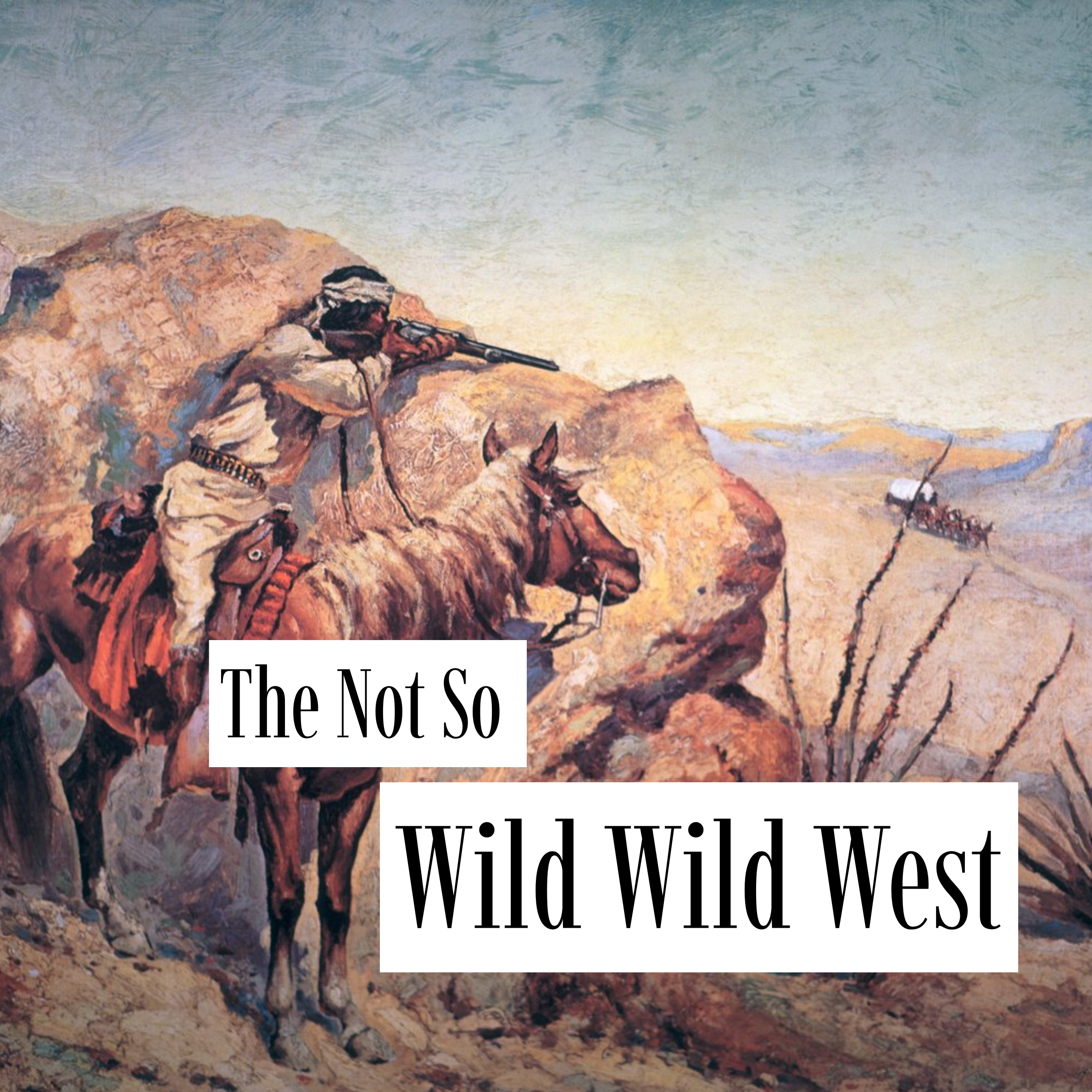
Gunslinging cowboys, pioneering individualists, and Native Americans in the background of the bison-filled Great Plains or the towering red buttes of Arizona—these are the images of America's Westward Expansion. While there is a hint of this romanticized history in reference to the likes of Buffalo Bill and Crazy Horse, they do not capture the always-present United States federal government. Instead, this perspective of the Wild West should begin to incorporate the large-scale intervention by the federal government. This analysis of the federal government's intervention into making a not-so-wild Wild West: three different perspectives are explored: direct federal intervention, race-making, and creating wilderness.
Despite the American annexation of much of the West in 1848 after its victory in the American-Mexican War, it remained sparsely populated and underdeveloped. The reason for this underdevelopment was because of the U.S.'s inability to project its power into the interior of the West due to the Native American tribes that fought against the encroaching imperial power and the lack of navigable rivers that the East was dominated by. A trip from one end of the U.S. to the other also would have taken months. This standstill was changed by the steam engine and railroad. The 1850s U.S. knew that the railroad would change the nation and so pursued its construction, but legislation was opposed by southern representatives, but with the exit of the South and thus their legislators, any legislation for the railroad was left unopposed, and so in 1862, the Pacific Railway Act was passed. The stage had been set for the federal government to create a wild west inhabited by these American individualists.
Two companies heeded the federal government's demand for the construction of this transcontinental railroad: the Union Pacific and the Central Pacific Railroad companies. On May 10th, 1869, the Golden Spike connected not just 1,776 miles of track or a nation but a continent from "sea to shining sea." Those 1,776 miles of track made a cross-country trip a mere couple days compared to the previous arduous several months. This achievement on the surface was due to the entrepreneurial efforts of the Big Four: Collis Huntington, Mark Hopkins, Leland Stanford, and Charles Crocker, and the brave contributions of the discriminated Irish and Chinese workers who often died in the line of work. History shows, though, that it was the federal government that made the megaproject possible. The federal government gave land grants to these rail tycoons totaling 10% of all land in the Wild West and bankrolling them with low-interest loans and subsidies once finished. The transcontinental railroad was a medium for the U.S.'s projection of power and from that gave the opportunity for American citizens to become pioneers.
What are railroads, though, without the plurality of America to follow them? The Homestead Act of 1862 is an example of the federal government's power projection by using the opportunities presented in the act as a carrot on a stick for the American people. The act gave forty to sixty acres to any American able to prove that they developed the parcel and, after five years of inhabitancy, paid the five-dollar filing fee. The quality and quantity of the land, though, depended on the 100th meridian. This line split the country into a West-East divide, where the East was fertile and dominated by the Mississippi River while the West was a comparatively sterile land. The settlers on the East on average thrived more than the settlers in the West. While the land was a government handout, the process of developing and traveling to these parcels was in the hands of the citizens. This lack of assistance led to two separate groups of homesteaders. First were well-off white farmers who sought to grow their estates. The second were the outcasts of mainstream American society, from former slaves to European immigrants to single white women, all united in their pursuit of building a life out West. It is from this mass migration spurred by the federal government of 400,000 people that the image of individualist cowboys and pioneers developed.
The American settlers were not newcomers to the West but interlopers in an already inhabited land by indigenous peoples. To the tribes the American settlers and the government backing them posed an existential threat to their way of life. For the American government these tribes were nothing more than something to be contained. Though this was not just a story of Anglo-Saxon American and Indigenous American interests, there was also a group of immigrants from across the world. This one-sided power dynamic led the federal government to act as a race maker with the Americans of the Wild West as vectors for it.
In fifty years, from 1865 to 1915, the indigenous tribes of the West were subjugated by the federal government. This subjugation was the result of different trends, though most of them were the result of the federal government's intentional power projection. There were two avenues that the federal government pursued their agenda. The first was through hard power and the second through soft power.
The federal government always had an interest in the expansion of its industrial power, as a prosperous industry supported its power. For example, the Black Hills gold deposit, once taken from the Sioux, would supply 10% of the world's gold supply for 100 years. There was also an inherent mismatch of the Plains tribes' bison-based nomadism and the sedentary cattle ranches. The American bison was a staple for the Plains Indians, as it held religious, cultural, and dietary importance. The federal government realized the importance of the bison to the Plains Indians and, by state sponsorship, pursued the eradication of the bison through private American hunters. There were more direct ways the federal government projected its power onto the tribes, such as the 1860–1890 Plains Indian Wars. This encroachment on the indigenous peoples' land was done to give an opportunity to the American people.
The year is 1899, and the Census has announced the closing of the frontier. This would signal a radical shift in the federal government's power projected in the West from viewing it as a frontier to be expanded to a managed wilderness. The creation of wilderness as a construct began earlier with the 1891 Forest Reserves Act; this gave the president the ability to regulate the usage of public domain land. This 1891 act would give rise to the 1905 creation of the U.S. Forest Service, the first example of twentieth-century positive statism. Gifford Pinchot was the man for the Forest Service, as his leadership and political maneuverings secured multiple concessions from the states to help manage the tracts of land under his administration. Pinchot turned a simple organization into a near technocratic federal institution that managed a third of all federal land. ¹³ The Forest Service represents the full extent of positive statism as a means for the United States' power projection to manage the hundreds of millions of acres that it does.
"Wilderness is waste" was the philosophy of the federal government, but that philosophy could only exist in the extreme power projection that was now possible because of positive statism in the West. But what does wilderness mean? This question is explored in Spence's paper, "Dispossessing the Wilderness." He finds from Yosemite that the federal government, by the pushing off of the indigenous peoples and the subsequent management of their lands by institutions like the forest service, created the concept of wilderness. This false sense of wilderness was characterized by the belief of the West as this untouched virgin land that needed to be managed. Of course little attention was paid to Indians' relationship with the land, and they were discounted as savages. The concept of wilderness was a construction of the federal government and has since been followed by the American people.