America From the Other Side of the World
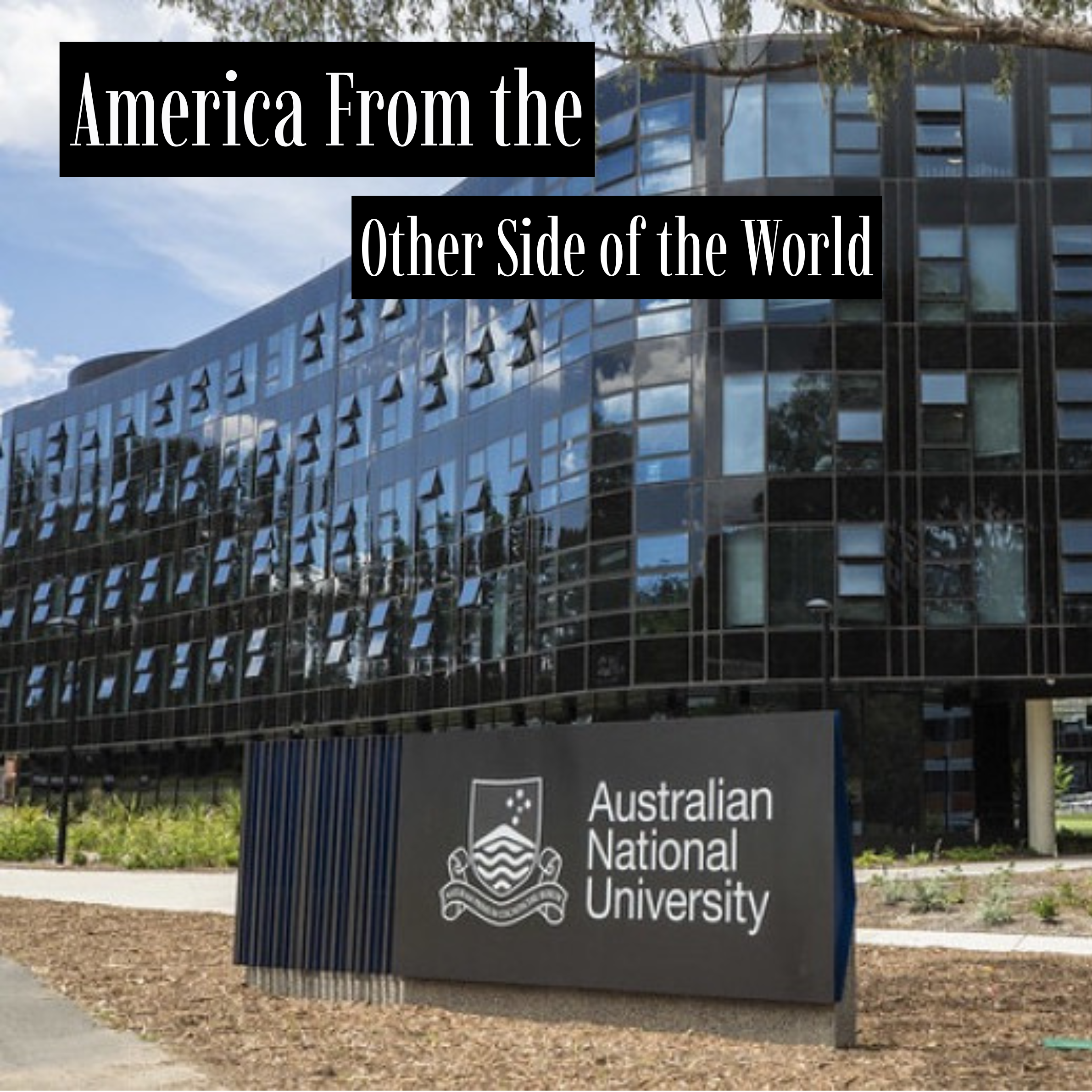
I’ve spent the last few months studying abroad in Australia, at the Australian National University in particular. As an international student who chose this city out of any other in the whole wide world, people here tend to be very confused as to why I chose to go to the nothingburger that is Canberra, Australia.
They’re right. There’s nothing here. Canberra is the Sacramento of Australia. It’s the capital. It’s got a large university, a few bars, a few museums, more government buildings than one could ever need, and a half-hearted inland city two hours from anything interesting. I’m from Sacramento. Feels like home.
The answer is that I came here to escape US-centric politics, international relations, and perspectives. I wanted to know what the world looks like on the other side of the globe. In the US, I feel like we’re grappling with existential, systemic, life-and-death questions on the daily. Nothing is funny anymore. I used to think about American politics like high-stakes reality television—cheating, financial ruin, and assassination plots, all with the added intensity of 350 million lives in the balance. Now that my entertainment and morbid fascination are hurtling towards irreversible global damage and the opposition party I dedicated the past few years of my life to is fracturing before my eyes, it all just feels futile. I was tired.
I felt like, maybe, the capital of a nation with no particular animosity towards the US and as geographically separated from the US as one could possibly be would perhaps depart from this approach I was so used to. Might depart from the debate on US hegemonic standing, the efficacy of US foreign policy, and the quality of the current US administration. The reality turned out more like Canberra City—far more like home than I expected.
I have never talked about the US more in my life. Australians in academia are obsessed with US politics, and it's fascinating. So many Aussies I’ve spoken to have told me that Australians tend to follow US politics more closely than their own.
For a while, I found myself frustrated with how they spoke about American politics. Like it's unreal. Distanced. In a political science class in the States, there’s a certain care in speaking. Nearly everyone in class has opinions built on and by their lived experience, and it’s necessary to craft an opinion that reflects that, and be aware that sharing it has the potential to ignite a fire under someone else’s ass and change their opinion of you permanently. Opinions are crafted and shared with the understanding that they matter to and have an impact on the people around you. Everything is personal, and everyone has an opinion, and no one can leave. It frustrated me—them sitting there on the high horse of a functioning welfare system and a 0.8 V-Dem ranking, talking shit about my home.
There’s a kind of distance from the dumpster fire built by academic analysis, geographical distance, and a robust welfare system. Some degree of it is incredibly useful — viewing a system from the outside is unique and fascinating to listen to. Some degree of it is just devoid of something essential. There’s some reflexive backlash to someone without lived experience making commentary on my home. Like if someone were to insult my hometown. Yes, I agree with every insult and criticism and derision. Yes, I have made the same comments myself in the past. Yes, I will defend it with my dying breath.
The second thing I learned was that this reaction of mine was reflexive and irrational. They do have lived experience. There’s a difference between someone commenting on my hometown—a place they’ve never been to or heard of—and someone commenting on the United States of America—the global hegemon. What the US does affects them. Obviously, US foreign policy has a global impact; see the 42% increase in Australian national average gas prices in the last month. But even domestic policy affects them. A doctor here told me that an FDA drug regulation had recently changed and so it would likely change here soon too. The US is a global leader. Others follow suit. It’s why people abroad cared so much when Roe vs. Wade was overturned. The US set a precedent they were scared their own country would follow, like it had so often in the past.
It’s still a little weird for someone to meet me, discover I’m American, immediately ask me if I’ve ever been in a school shooting, then go on to give their detailed opinions on gun control and constitutional originalism. They are, however, entitled to their opinions on Trump’s war in Iran as thousands die, gas stations are driven out of business, and their closest military and economic partner looks increasingly unstable and undemocratic.
It’s also a little strange to just be talking about the United States this much and often. Going to school in the US, you eat, sleep, breathe, and shit the US. Literally. US politics isn’t novel. At a school obsessed with intellectual showmanship, to talk about the US is mundane. To be here is refreshing, more or less. Perspectives are more balanced. US legacy is complicated, and I understand that better now.
The first thing my study abroad advisor told me to do was to say I was Californian, not American. “Don’t lead with the controversy,” he said. “Lead with beaches and skyscrapers and the liberal dream.” I met a South African woman who told me that the dream of her generation was America. I met countless people my age who told me it was Europe. That they would never dream of America. I don’t think I understood what American politics meant until I left.
That, I guess, is what I’ve been trying to reconcile. The death of the American Dream and the power America still holds in the imaginations of the IR-minded. America is no longer aspirational. It is a military, economic, and diplomatic powerhouse. But I have never met anyone who wanted to see it. America as I know it is beautiful—mountains and deserts and oceans and skyscrapers. America as they know it is a wrathful god.